

 en
en русский
 Deutsch
 日本語
日本語 Español
 简体中文
简体中文Door Driving Precision Planetary Reducer
Cat:MK series planetary reducer
Industry-product lineupApplicable to: Door drive (planetary, coaxial shaft)MKB Precision Planetary Reducer is a cutting-edge mechanical device designe...
See DetailsContent
In high-accuracy machinery, the difference between acceptable performance and exceptional performance is often measured in arcminutes. A positional error of just 5 arcminutes — roughly 0.083° — can translate into visible defects in semiconductor wafer processing, misaligned welds in robotic assembly, or surface finish deviations in CNC milling. At these tolerances, the transmission system is not a supporting component; it is the deciding factor. Planetary reducers have become the engineering standard for such environments precisely because their architecture is built around the demands of precision — not adapted to them. This article examines how planetary reducers achieve high-accuracy operation, what parameters define their performance, and where they prove most indispensable in modern precision machinery.
Conventional parallel-shaft or worm gear reducers are adequate for general-purpose industrial drives. But when a machine must repeatedly position a tool, joint, or stage to within microns, their structural limitations become critical liabilities. The core issues are backlash, torsional compliance, and load asymmetry.
Backlash — the rotational play between mating gears when drive direction reverses — is the most damaging factor in positioning accuracy. A standard worm gearbox may exhibit 15–30 arcminutes of backlash. In a robotic joint with a 500mm arm, 20 arcminutes of angular error at the joint produces a positional error of approximately 2.9mm at the end effector — far beyond tolerance for precision assembly or surgical robotics.
Torsional compliance (the tendency of a gearbox to twist elastically under load) introduces dynamic error: the output shaft lags behind the input command during acceleration and overshoots during deceleration. In CNC rotary axes or servo-driven pick-and-place systems, this produces positioning instability that cannot be fully corrected by control algorithms alone.
Understanding the difference between a planetary reducer gearbox and a helical gearbox makes clear why engineers working in high-accuracy environments consistently specify planetary designs: the multi-point load distribution inherent to planetary architecture directly solves both problems at the source.
A planetary reducer achieves its precision characteristics through a fundamentally different internal geometry compared to conventional gearboxes. Planetary reducer gearboxes use four interdependent components working in concert:
The precision advantage emerges from this multi-point mesh. With three planet gears simultaneously engaged, the total load is shared across six tooth-contact zones at any moment — three between the sun and planets, three between planets and ring. This distributes stress evenly, reduces per-tooth deflection, and dramatically limits the angular play that produces backlash. The coaxial alignment of input and output shafts eliminates the lateral force vectors that cause bearing wear and positional drift in offset-shaft designs.
The result is a system where gear mesh error, bearing deflection, and thermal expansion are all minimized simultaneously — not through post-production adjustment, but through geometric design. This is why precision planetary units consistently achieve backlash ratings below 3 arcminutes, with high-end configurations reaching ≤1 arcminute.
Specifying a planetary reducer for precision applications requires a clear understanding of the parameters that govern accuracy and reliability. Four metrics are decisive:
| Parameter | Typical Range | Engineering Significance |
|---|---|---|
| Backlash | ≤1 to 5 arcmin | Directly determines positional repeatability on direction reversal |
| Torsional Stiffness | 5 – 100+ Nm/arcmin | Controls dynamic positioning error under variable loads |
| Transmission Efficiency | 95% – 99% per stage | Determines heat generation, motor sizing, and energy cost |
| Peak Torque Capacity | 2–3× rated torque | Defines safe operating envelope during acceleration and emergency stops |
Backlash is the primary accuracy metric. For a robotic joint requiring ±0.01° repeatability, a gearbox with 5 arcmin (0.083°) of backlash simply cannot meet the specification — only units rated at ≤1 arcmin are viable. For conveyor drives or material handling where positioning demands are moderate, 5–8 arcmin units offer a cost-effective balance.
Torsional stiffness, measured in Nm per arcminute, quantifies how much the output shaft twists elastically under load before true mechanical motion occurs. In servo-driven axes undergoing rapid reversals — common in CNC machining and pick-and-place automation — high torsional stiffness prevents the oscillation that causes surface finish defects and cycle time extension.
Efficiency of 97–99% per stage means that a single-stage planetary unit wastes less than 3% of input energy as heat. This matters beyond energy cost: heat causes thermal expansion of gear components, which degrades precision over extended operating cycles. Maintaining high efficiency is therefore directly linked to sustained accuracy — not merely to power consumption.
The combination of low backlash, high stiffness, and compact form factor makes planetary reducers the default specification across the most demanding sectors of precision engineering.
Rotary table axes and tool-changer drives in CNC machining centers require positioning accuracy that is repeatable across tens of thousands of cycles. The torsional stiffness of a precision planetary unit ensures that cutting forces — which create reactive torque on the output shaft — do not shift the workpiece position during operation. Units rated at ≤3 arcmin backlash with stiffness above 40 Nm/arcmin are standard for these axes.
Every joint in a servo-driven articulated robot arm is a precision positioning system. As explored in depth in our analysis of how planetary reducers enhance robotic arm performance, low backlash at each joint compounds favorably: a six-axis arm with ≤1 arcmin at every joint achieves end-effector repeatability in the range of ±0.02mm — sufficient for electronic component placement and surgical assistance. The compact, coaxial form factor also minimizes the rotational inertia at each joint, allowing faster cycle times without sacrificing positional accuracy.
Wafer handling and lithography stage drives represent the most demanding precision environment in industrial manufacturing. Positional tolerances are measured in nanometers, and any vibration or thermal drift from the transmission system directly impacts yield. Planetary reducers for semiconductor applications are selected for near-zero backlash, extremely high torsional stiffness, and the ability to operate continuously without lubrication migration that could contaminate clean-room environments.
Surgical robotic systems require not only precision but predictable, smooth motion with no sudden positional jumps — a failure mode that can result from excessive backlash during direction reversal. The symmetrical load distribution within a planetary reducer produces characteristically smooth output motion, making it the preferred transmission in robotic surgery platforms, imaging device positioners, and rehabilitation equipment.
MAKIKAWA-MOTION originates from Kyushu Precision Technology Industry in Fukuoka, Japan — an environment where sub-micron machining tolerances are a baseline expectation, not a target. This heritage directly shapes the manufacturing approach applied to the MK series precision planetary reducers.
Key elements of MAKIKAWA's precision manufacturing process include:
The practical result is a product line characterized by high precision, high rigidity, high torque output, low noise, extended service life, and maintenance-free operation — qualities that reflect manufacturing discipline rather than marketing positioning.
Even the most capable planetary reducer will underperform if mismatched to its application. A structured selection process prevents the most common and costly engineering mistakes:
Precision is not a product feature that can be added after the fact — it must be designed in from the selection stage. Planetary reducers, when correctly specified and properly integrated, provide the mechanical foundation on which high-accuracy machinery reliably performs.
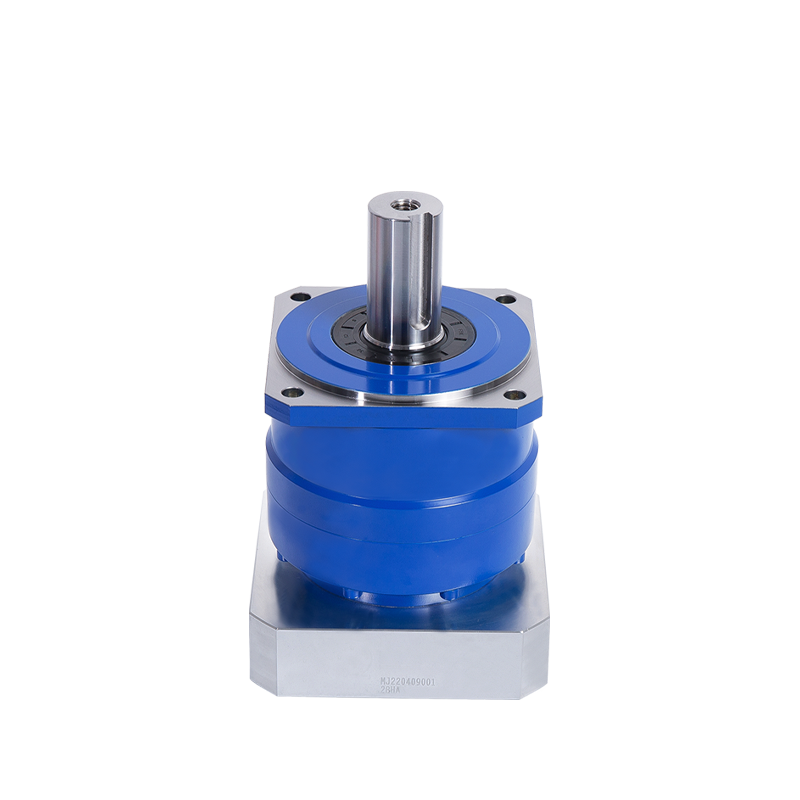
Industry-product lineupApplicable to: Door drive (planetary, coaxial shaft)MKB Precision Planetary Reducer is a cutting-edge mechanical device designe...
See Details
Meet the needs of customers with high-precision requirements for semiconductor devices, machine tools, etc.MKG reducer meets the various needs of cust...
See Details
Ball bearings, orthogonal axis, more flexible installationMKEB Planetary Reducer stands as a testament to advancements in planetary gear technology, f...
See Details
Suitable for customers with high output and compact requirementsApplicable to: Crossed roller bearings, for door drive (planetary, orthogonal shaft/ho...
See Details
Suitable for customers with rich needs such as semiconductor manufacturing equipment and machine toolsApplicable to: Tapered roller bearings for door ...
See Details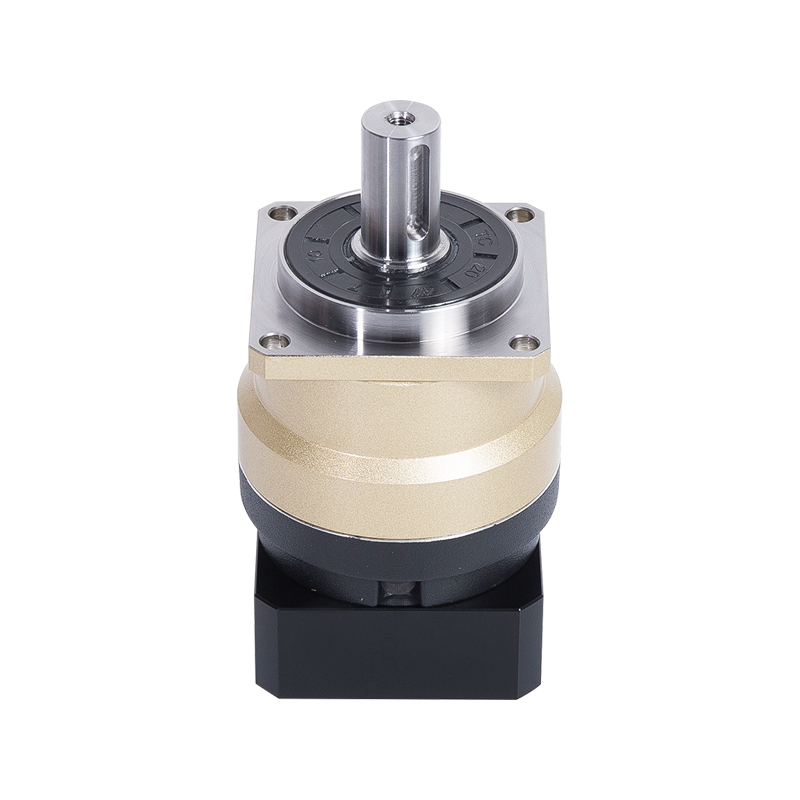
Helical gear design, high bite rate, smooth operation, low noise, low backlash. The sun gear output shaft bearing is designed directly in the arm to e...
See Details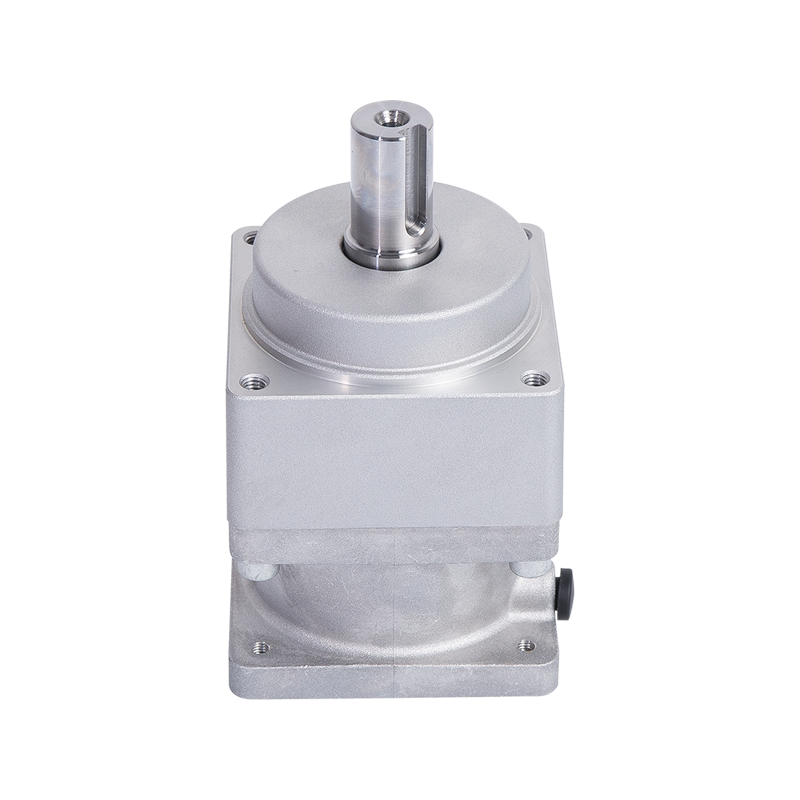
This MKGC-5C-400 high torque durable economical star reducer is designed for stable, cost-effective power transmission in general industrial and heavy...
See Details
High-performance output shaft type planetary reducer, with high rated speed and high dynamic application, adopts lightweight design and high-efficienc...
See Details
The worm bevel double output shaft type planetary reducer uses a combination of worm gear transmission and planetary gear transmission to improve the ...
See Details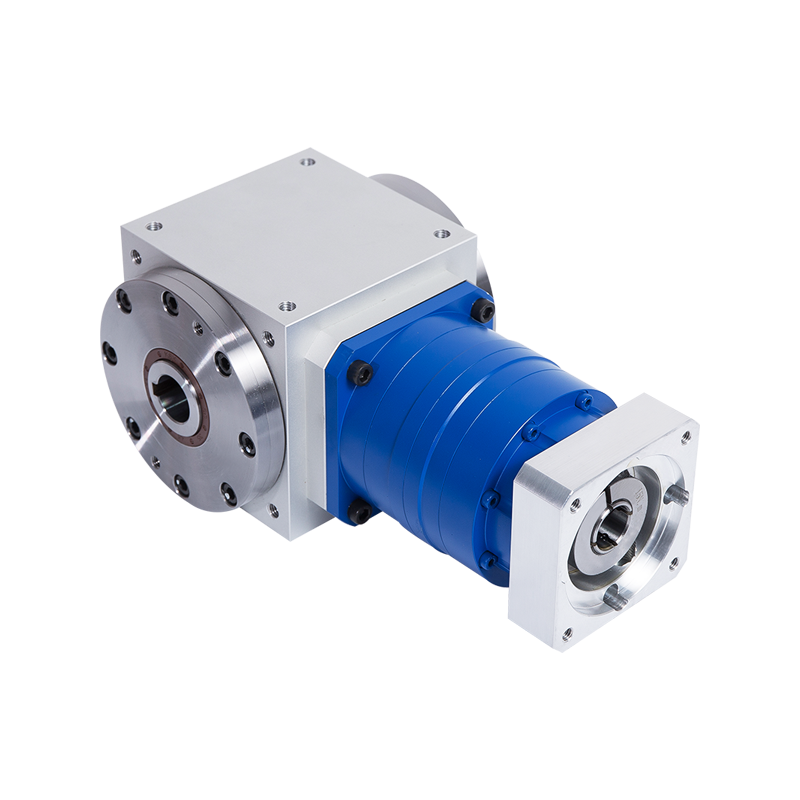
The hollow-type high-precision spiral bevel gear reducer is specially designed. The hollow design makes the center space of the reducer empty and can ...
See Details
MAKIKAWA-MOTION TECHNOLOGY (ZHEJIANG) CO., LTD. @ All rights reserved

Custom High Precision Planetary Gearbox Reducer Manufacturers