

 en
en русский
 Deutsch
 日本語
日本語 Español
 简体中文
简体中文Door Driving Precision Planetary Reducer
Cat:MK series planetary reducer
Industry-product lineupApplicable to: Door drive (planetary, coaxial shaft)MKB Precision Planetary Reducer is a cutting-edge mechanical device designe...
See DetailsContent
AGV fleets now move billions of dollars' worth of goods every day—and the drivetrain hiding inside each wheel hub is what makes or breaks operational reliability. At the core of that drivetrain is the ring-gear output AGV planetary reducer gearbox: a compact unit that converts high-speed motor rotation into the high-torque, low-speed output needed to drive heavy payloads across warehouse floors, 24 hours a day.
With the AGV market projected to grow from $5.57 billion in 2025 to $11.17 billion by 2033, choosing the right reducer isn't a minor spec decision—it's a long-term investment in system uptime, floor safety, and throughput capacity. This guide cuts through the noise and tells you exactly what to look for.
Not all gearboxes are created equal. Worm gearboxes lose energy to sliding friction, running at 60–80% efficiency. Spur gear reducers are larger and noisier. Planetary configurations distribute load across three or more planet gears simultaneously, which allows them to achieve efficiencies above 95% in a housing that's dramatically smaller and lighter.
For AGVs, that size-to-torque ratio matters enormously. Every kilogram saved in the drivetrain extends battery range and increases net payload capacity. Every percentage point of efficiency recovered means fewer charge cycles and lower operating cost per pallet moved.
The coaxial design—input and output on the same axis—also simplifies integration directly into the drive wheel assembly, reducing the number of mechanical joints that can wear or misalign over time.
Engineers often focus on rated torque and stop there. That's a mistake. Here are the five parameters that actually determine whether a reducer will survive in an AGV application:
The reduction ratio is the multiplier between motor speed and wheel speed—and selecting the wrong one is expensive to fix after deployment. Start with your target AGV travel speed, your wheel diameter, and your motor's rated RPM. From those three numbers you can calculate the exact ratio your drivetrain needs.
A single-stage planetary unit covers roughly 3:1 to 10:1. Two-stage units extend that range to 100:1 or beyond. Most AGV drive applications land in the 10:1 to 40:1 range, which a two-stage unit handles cleanly while maintaining high efficiency and compact dimensions.
A higher ratio amplifies output torque proportionally—but it also amplifies any positioning error in the upstream motor encoder. For closed-loop servo-driven AGVs, keep the ratio as low as possible while still meeting torque requirements. For open-loop stepper-driven designs, a higher ratio provides more margin.
Standard spur-gear planetary reducers are cost-effective and widely available, but they generate audible gear mesh noise—typically in the 65–75 dB range under load. In a noisy factory floor, that's irrelevant. In hospitals, airports, office campuses, or retail environments where AGVs are increasingly deployed, it becomes a real operational constraint.
Helical-gear planetary reducers use angled tooth geometry that creates a gradual, overlapping engagement rather than a sudden mesh impact. The result is noise levels 5–10 dB lower and measurably smoother torque output. The trade-off is a slight axial thrust load that requires appropriate bearing selection. For any noise-sensitive environment, helical gears are worth the modest cost premium.
The output bearing in an AGV reducer takes the full weight of the vehicle's payload—often 500 kg to several tonnes—as a sustained radial load. Standard deep-groove ball bearings, common in lighter-duty reducers, are not designed for this. They deflect, wear, and eventually allow output shaft runout that degrades positioning performance long before a catastrophic failure occurs.
Crossed roller bearings handle simultaneous radial, axial, and moment loads with exceptional stiffness. Tapered roller bearings excel at high radial and axial combined loads. Pre-tensioned angular contact bearing pairs offer a middle ground with good stiffness and lower friction than tapered configurations. Match the bearing type to your actual load profile—a spec sheet that lists only radial load ratings is incomplete.
For a deeper look at how different precision planetary reducer series handle output bearing configurations, comparing tapered, crossed-roller, and ball-bearing designs side by side is instructive when specifying for high-cycle AGV duty.
A reducer with the right specs can still create integration headaches if the mechanical interface isn't thought through early. The input flange must match your servo or brushless motor exactly—motor shaft diameter, keyway spec, and flange bolt pattern all need to align before assembly. Mismatched interfaces require custom adapters that add axial length, weight, and potential misalignment.
Ring-gear output designs—where the output is taken from the outer ring rather than a central shaft—allow the reducer to be integrated directly into the wheel hub, minimizing total drivetrain length. This configuration is particularly effective in compact AGV chassis designs where every centimeter of vertical height matters for passing under low shelving or conveyor systems.
For units that must accommodate cable or pneumatic routing through the center of the drivetrain, hollow-shaft variants eliminate the need for external cable management that can snag or wear over time.
Most precision AGV planetary reducer gearboxes are grease-lubricated for life, requiring no routine oil changes. But "lubricated for life" assumes operation within the rated load and temperature envelope. AGVs running overloaded or in high-ambient-temperature environments can shorten lubricant life significantly. Periodic thermal monitoring of the reducer housing—simple infrared measurements during a maintenance round—catches abnormal heat buildup before it causes internal damage.
Backlash measurement is the most reliable leading indicator of internal wear. A unit that shipped at 3 arcmin and now measures 8 arcmin has worn planet gear teeth or carrier bearings that will only deteriorate faster under continued load. Catching this at 8 arcmin—rather than waiting for audible grinding or positioning failures—allows a planned swap-out rather than an emergency repair that stops an entire AGV lane.
Keep one or two spare reducer units per AGV model on hand. The cost of holding inventory is trivial compared to the cost of halting an automated line while waiting for a two-week lead-time replacement.
Technical specs are table stakes. The questions that actually differentiate suppliers are operational ones: Can they provide application engineering support before you finalize the spec? Do they offer custom shaft configurations and flange patterns, or only catalog configurations? What is their actual lead time on standard units—and on custom builds? Do they have documented test data on thermal performance at continuous duty?
A supplier with a purpose-built AGV reducer line—rather than a general industrial gearbox adapted for AGV use—will have gone through the application-specific failure modes already. Their designs will reflect lessons learned from fleet-scale deployments, not just laboratory validation.
The AGV industry is scaling fast. Over 450,000 logistics robots were sold globally in 2025, compared to 75,000 in 2019. The drivetrains powering those fleets need to be right from day one—because retrofitting a reducer specification error across a 200-unit fleet is an exercise no one wants to repeat.
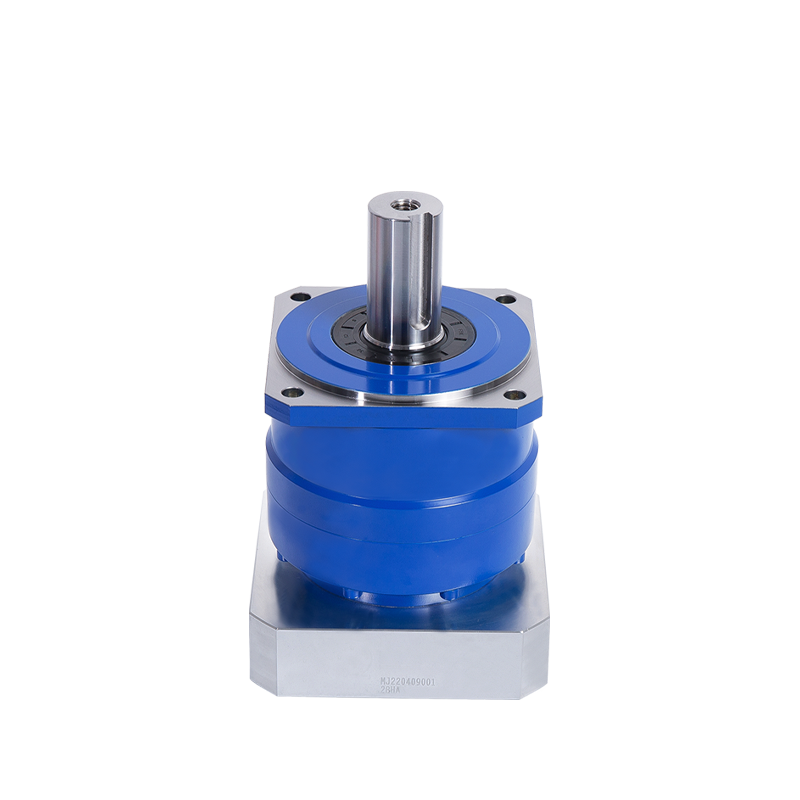
Industry-product lineupApplicable to: Door drive (planetary, coaxial shaft)MKB Precision Planetary Reducer is a cutting-edge mechanical device designe...
See Details
Ball bearings, orthogonal axis, more flexible installationMKEB Planetary Reducer stands as a testament to advancements in planetary gear technology, f...
See Details
Suitable for customers with high output and compact requirementsApplicable to: Crossed roller bearings, for door drive (planetary, orthogonal shaft/ho...
See Details
Suitable for customers with rich needs such as semiconductor manufacturing equipment and machine toolsApplicable to: Tapered roller bearings for door ...
See Details
MKEL Planetary Reducer specifically engineered for the intricate demands of semiconductor fabrication processes integrates into manufacturing equipmen...
See Details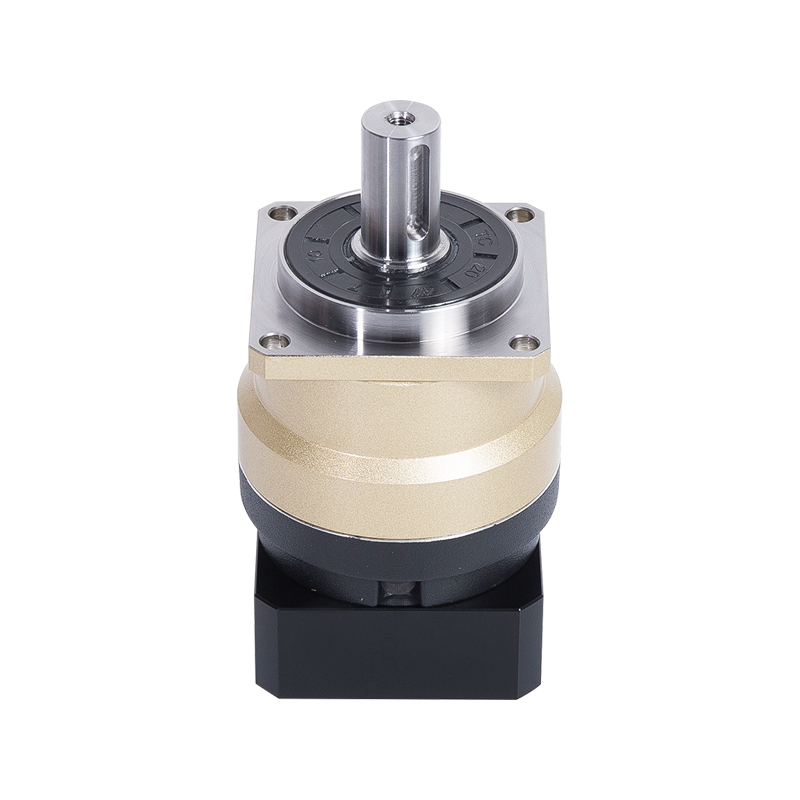
Helical gear design, high bite rate, smooth operation, low noise, low backlash. The sun gear output shaft bearing is designed directly in the arm to e...
See Details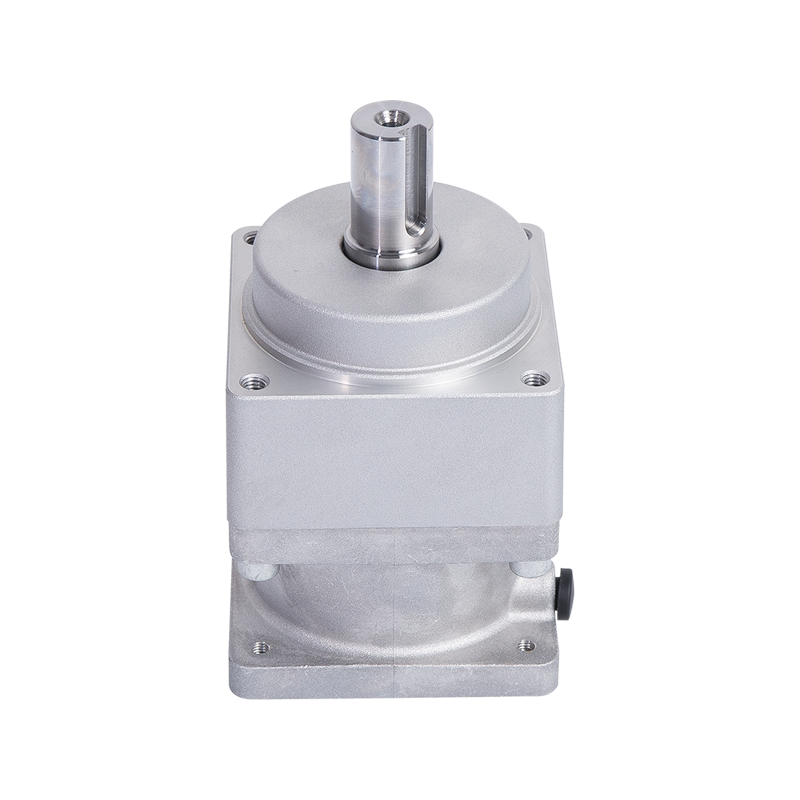
This MKGC-5C-400 high torque durable economical star reducer is designed for stable, cost-effective power transmission in general industrial and heavy...
See Details
MPEB helical gear design economical star reducer a departure from conventional spur gears. The helical gear design brings a host of advantages, includ...
See Details
The worm bevel double output shaft type planetary reducer uses a combination of worm gear transmission and planetary gear transmission to improve the ...
See Details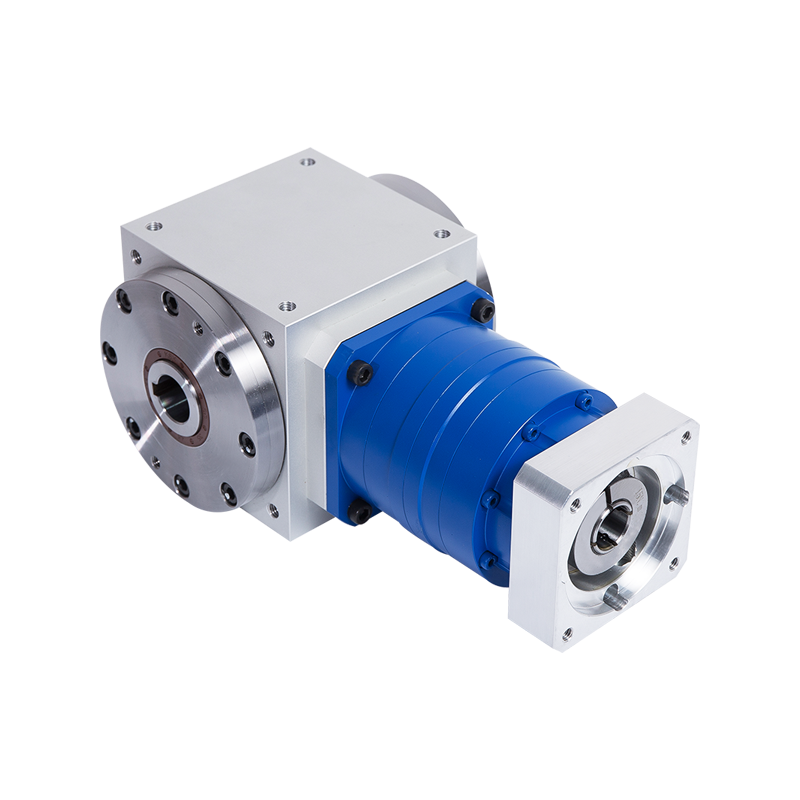
The hollow-type high-precision spiral bevel gear reducer is specially designed. The hollow design makes the center space of the reducer empty and can ...
See Details
MAKIKAWA-MOTION TECHNOLOGY (ZHEJIANG) CO., LTD. @ All rights reserved

Custom High Precision Planetary Gearbox Reducer Manufacturers