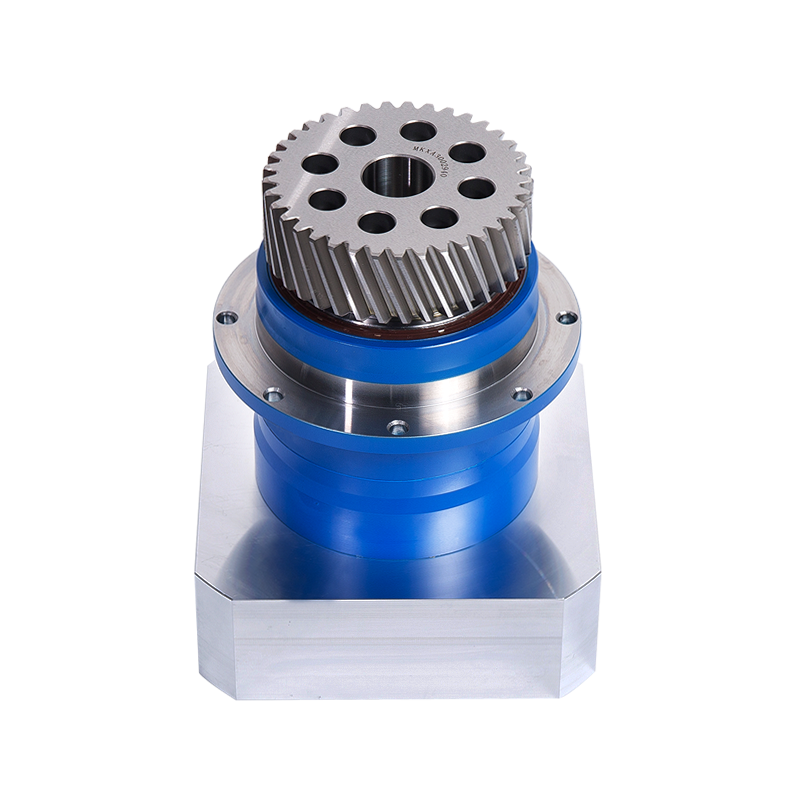
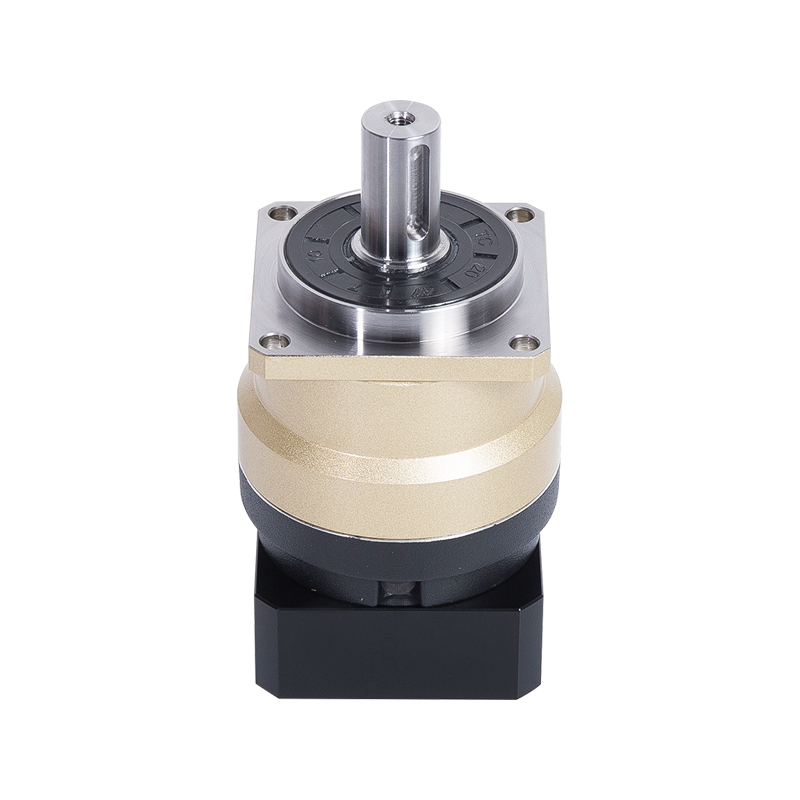
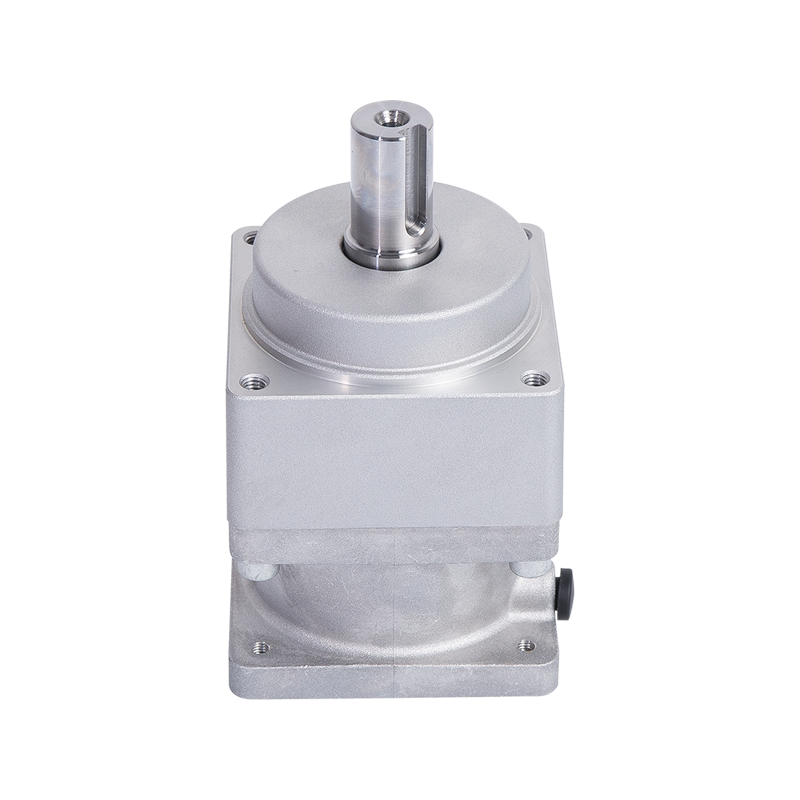
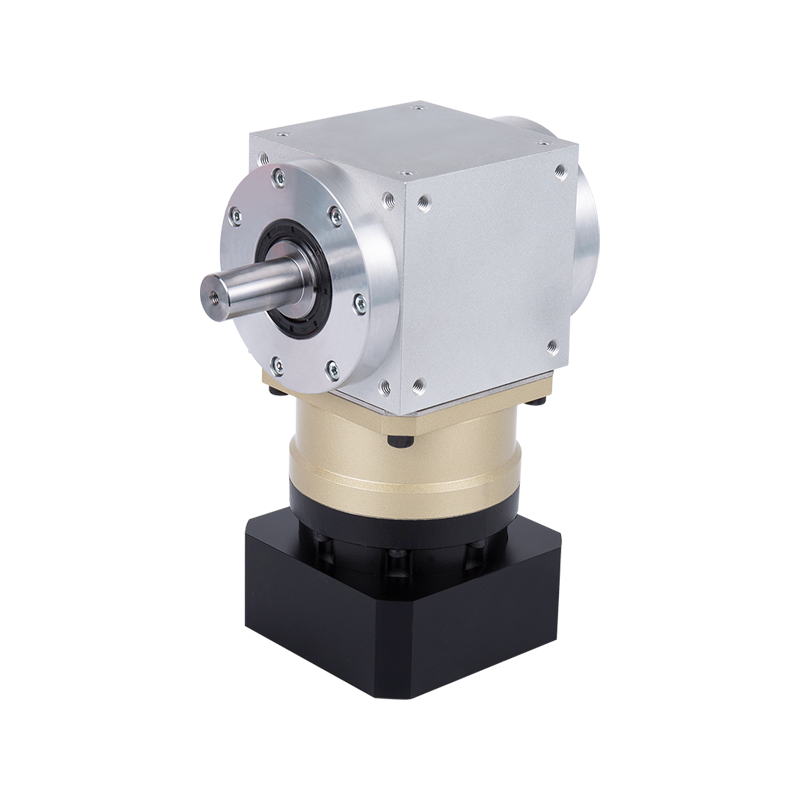
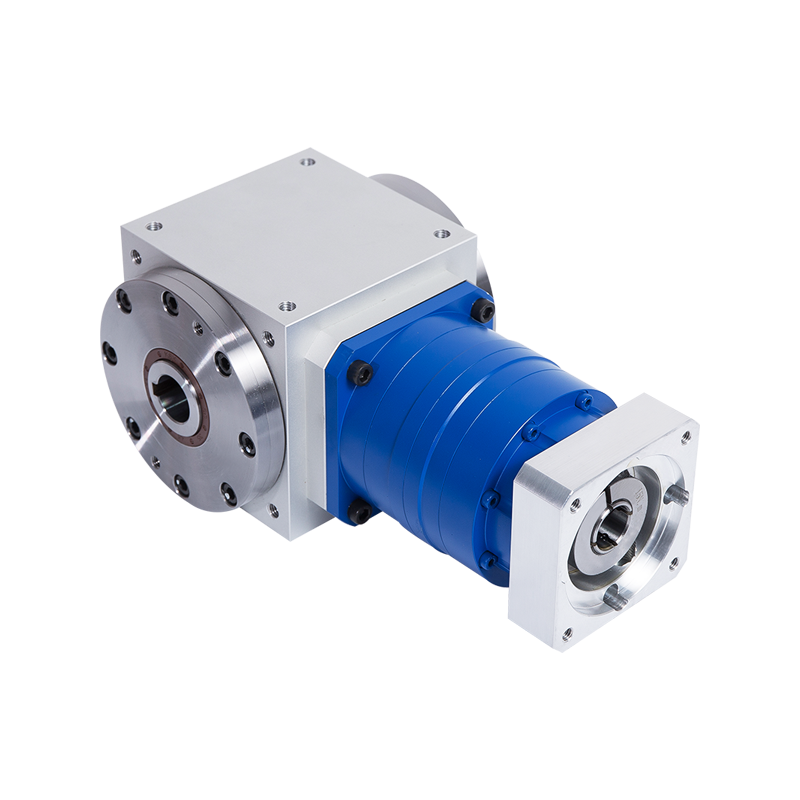
A servo motor running at 3,000 RPM delivers almost no usable torque to a conveyor arm — unless something sits between the motor shaft and the load. That something is a gearbox reducer for servo motor applications, and choosing the wrong one costs more than the part itself. It costs positioning accuracy, service life, and in precision automation, it costs you rejects on the production line.
This article walks through five selection criteria that engineers frequently overlook — not the obvious ones on the datasheet, but the ones that separate a system that works from one that barely lasts a year.
Understand the Torque Gap First
Servo motors are optimized for high-speed, low-torque output. A 750W servo running at 3,000 RPM produces roughly 2.4 Nm of continuous torque. Most industrial loads — robotic joints, CNC axes, laser cutting gantries — need 30 to 150 Nm to operate reliably. The reducer with servo motor bridges this gap by trading speed for torque at a defined ratio.
The multiplication is linear: a 20:1 reducer on that same 750W servo yields approximately 48 Nm at the output shaft (accounting for ~98% efficiency per stage in a well-designed planetary unit). The ratio is your most fundamental decision, and everything downstream depends on getting it right.
The 5 Numbers That Actually Determine the Right Reducer
1. Output Torque — Rated vs. Peak
Confirm both continuous and peak torque requirements. The MKT series planetary reducer, for instance, covers a rated output range of 27–180 Nm across frame sizes 064 to 255, with tapered roller bearings that handle radial loads from 370 N up to 8,500 N. If your application has shock loads — start-stop cycles, sudden reversals — the peak torque rating must exceed the calculated worst case, not just the average.
2. Backlash
For a positioning system, backlash is the enemy of repeatability. Precision planetary reducers achieve as low as 3 arc-minutes, which translates to roughly 0.05° of angular play. That sounds small. On a 500 mm arm, 3 arc-min produces a tip error of about 0.44 mm — acceptable for some conveyors, unacceptable for laser cutting or semiconductor handling. Know your tolerance budget before specifying a backlash grade.
3. Gear Ratio Range
Most servo applications fall between 5:1 and 50:1. Single-stage planetary designs typically cover 4:1 to 10:1; two-stage configurations extend this to 100:1 without chaining separate gearboxes. The MKT series spans 4:1 to 100:1 in both single and double-stage configurations — a range broad enough to serve both high-speed light-load axes and slow, high-force mechanisms in the same product family.
4. Radial and Axial Load Capacity
These are almost always underspecified. Engineers calculate motor torque carefully, then overlook the side-loads imposed by sprockets, pulleys, or belt tension on the output shaft. Radial load capacity on planetary reducers scales significantly with frame size — from 370 N at the smallest frame to 8,500 N at frame 255. Size the gearbox for the actual shaft forces, not just the torque.
5. Input Compatibility (the AD Flange)
A motor with reduction gearbox only works cleanly when the mechanical interface is designed for it. Look for an integrated AD adapter flange and a precision-machined input sleeve that eliminates radial runout at coupling. Sloppy motor-to-reducer connections introduce vibration that no amount of servo tuning can eliminate.
Why Planetary Architecture Dominates Servo Applications
Compared to worm gearboxes and helical inline units, planetary reducers distribute load across three or more planet gears simultaneously. This gives them the highest torque density per unit volume of any common reducer type — critical when machine envelopes are shrinking and axis counts are climbing.
Key performance advantages in servo pairings include near-zero radial play (critical for feedback stability), symmetric load distribution that minimizes housing deflection, and efficiency typically above 95% per stage — meaning the motor's electrical consumption translates directly into output work rather than heat.
MKT Series Planetary Reducer — Key Specifications
| Parameter |
Specification |
| Rated Output Torque |
27–180 Nm |
| Backlash |
3 arc-min |
| Gear Ratio |
4:1 to 100:1 |
| Radial Load Capacity |
370–8,500 N |
| Axial Load Capacity |
360–4,300 N |
| Frame Sizes |
064 / 090 / 110 / 140 / 200 / 255 |
| Bearing Type |
Tapered roller bearings |
| Weight Range |
1.4–77 kg |
Where These Systems Deliver the Most Value
The pairing of a precision planetary reducer with a servo motor is the default architecture in demanding motion control environments. Common deployment scenarios include:
- Robotic arms and SCARA robots — each joint needs independent torque multiplication with minimal backlash to prevent cumulative positioning error across multiple axes.
- CNC machine tool axes — rapid feed rates combined with high cutting forces require both speed reduction and rigid torque transmission.
- Laser cutting gantries — path accuracy at high traverse speeds depends on near-zero backlash and high torsional stiffness throughout the drivetrain.
- Semiconductor and photovoltaic equipment — micron-level positioning tolerances make backlash grade and axial stiffness non-negotiable.
- Automated guided vehicles (AGVs) — compact form factor and high radial load handling are critical for wheel-drive and steering axis applications.
Three Mistakes to Avoid When Ordering
First, never size by rated torque alone. Always apply a service factor of 1.5× to 2× for applications with frequent starts, reversals, or variable loads. Second, confirm the internal oil seal is present — without it, lubricant migrates into the motor during vertical mounting, destroying encoder seals within months. Third, specify the frame size based on shaft load calculations, not just torque. A reducer with adequate torque rating but undersized radial load capacity will fail at the bearing, not the gears.
Getting these three right adds nothing to the part cost. Getting them wrong multiplies your total cost of ownership significantly.


 en
en русский
 Deutsch
 日本語
日本語 Español
 简体中文
简体中文