

 en
en русский
 Deutsch
 日本語
日本語 Español
 简体中文
简体中文MKG Unipolar Precision Planetary Reducer
Cat:MK series planetary reducer
Meet the needs of customers with high-precision requirements for semiconductor devices, machine tools, etc.MKG reducer meets the various needs of cust...
See DetailsContent
A reduction gearbox is a mechanical device that reduces the rotational speed of an input shaft while simultaneously increasing its torque output. This fundamental component appears in countless applications, from industrial machinery to electric vehicles, enabling efficient power transmission by converting high-speed, low-torque rotation into low-speed, high-torque motion suitable for driving heavy loads.
The basic principle relies on gear ratios: when a small gear drives a larger gear, the output shaft rotates slower than the input shaft, but with proportionally greater rotational force. For instance, a gearbox with a 10:1 reduction ratio will output one-tenth the input speed but deliver ten times the torque, making it possible for a small motor to move substantial loads.
The operation of a reduction gearbox centers on the mechanical advantage created by different-sized gears meshing together. When an input gear with fewer teeth engages an output gear with more teeth, the speed decreases proportionally to the teeth ratio.
The gear ratio determines the relationship between input and output performance. Calculate it by dividing the number of teeth on the driven gear by the number on the driving gear. A 20-tooth input gear driving a 60-tooth output gear creates a 3:1 reduction ratio, meaning the output shaft rotates at one-third the speed of the input while delivering three times the torque.
This mathematical relationship follows the conservation of energy principle: ignoring friction losses (typically 2-5% per gear stage), the power remains constant through the gearbox. Since power equals torque multiplied by rotational speed, decreasing speed necessitates a proportional increase in torque.
Many applications require reduction ratios beyond what a single gear pair can practically provide. Multi-stage gearboxes employ several gear sets in series, multiplying their individual ratios. A two-stage gearbox with 4:1 ratios at each stage achieves an overall 16:1 reduction ratio, dramatically transforming a high-speed motor into a powerful low-speed output.
Different mechanical designs offer varying advantages in terms of efficiency, compactness, cost, and torque capacity. Selecting the appropriate type depends on application-specific requirements.
Spur gearboxes use straight-toothed gears mounted on parallel shafts. They represent the simplest and most cost-effective design, offering efficiency rates of 95-98% per stage. However, they generate more noise than helical designs and handle lower loads. Typical applications include conveyor systems and simple machinery where noise isn't critical.
Helical gears feature angled teeth that engage gradually, resulting in smoother, quieter operation than spur gears. This design distributes loads across multiple teeth simultaneously, enabling higher torque capacity. Modern helical reducers achieve efficiency levels of 96-98% and are preferred in industrial applications requiring heavy loads and continuous operation, such as mining equipment and steel mills.
Planetary gearboxes deliver exceptional power density through a compact arrangement: a central sun gear, multiple planet gears rotating around it, and an outer ring gear. This configuration distributes torque across several gear meshes simultaneously, allowing torque capacities 3-4 times higher than equivalent-sized helical reducers. Robotics, aerospace actuators, and wind turbines commonly employ planetary designs where space constraints demand maximum power in minimal volume.
Worm gearboxes use a screw-like worm engaging a worm wheel, typically achieving high reduction ratios (20:1 to 300:1) in a single stage. They offer self-locking capability and exceptionally quiet operation but operate at lower efficiency (50-90% depending on ratio and quality). Common applications include elevators, tuning mechanisms, and positioning systems where the self-locking feature prevents back-driving.
| Gearbox Type | Efficiency Range | Typical Ratio Range | Key Advantage |
|---|---|---|---|
| Spur Gear | 95-98% | 3:1 to 10:1 | Low cost |
| Helical Gear | 96-98% | 3:1 to 10:1 | Quiet operation |
| Planetary Gear | 94-97% | 3:1 to 100:1 | Compact size |
| Worm Gear | 50-90% | 10:1 to 300:1 | Self-locking |
Reduction gearboxes enable practical solutions across industries by matching motor characteristics to load requirements. Understanding these applications clarifies why specific gearbox types suit particular uses.
Conveyor systems rely heavily on reduction gearboxes to convert high-speed motor rotation (typically 1,200-1,800 RPM) into the slower speeds needed for material handling (30-150 RPM). A typical factory conveyor might use a 12:1 helical gearbox paired with a 1,750 RPM motor to achieve 146 RPM output, providing adequate torque to move heavy pallets while maintaining controllable speed.
Modern electric vehicles incorporate single-speed reduction gearboxes to optimize electric motor performance. The Tesla Model 3, for example, employs a 9:1 reduction ratio allowing its motor to operate efficiently at high speeds (up to 18,000 RPM) while delivering appropriate wheel speeds. This single reduction replaces the complex multi-speed transmissions required in combustion vehicles.
Large wind turbines use gearboxes to increase the slow rotation of turbine blades (10-20 RPM) to speeds suitable for efficient generators (1,200-1,800 RPM). A 2.5 MW turbine might use a three-stage planetary gearbox with a 1:100 overall ratio, transforming 15 RPM blade rotation into 1,500 RPM generator speed.
Robotic joints require precise motion control with substantial holding torque. Planetary gearboxes excel here, with industrial robot arms commonly using 50:1 to 100:1 ratios in compact housings measuring just 80-120mm in diameter. This enables servo motors to position heavy payloads with high accuracy while maintaining minimal arm bulk.
Choosing the appropriate reduction gearbox requires balancing multiple technical and economic factors specific to your application.
Calculate the necessary ratio by dividing motor speed by desired output speed. Account for application variability: a machine requiring variable output speeds might benefit from a variable frequency drive (VFD) controlling motor speed rather than a fixed gearbox ratio.
Determine maximum torque demands including startup conditions, which often exceed running torque by 150-300%. Select a gearbox with a service factor (typically 1.5-2.0) to ensure longevity under real operating conditions including shock loads and duty cycle variations.
Energy losses convert to heat, affecting both operating costs and cooling requirements. In a 10 HP application, a 95% efficient gearbox wastes 0.5 HP as heat, while a 70% efficient unit wastes 3 HP. Over continuous operation, this difference significantly impacts energy bills and may necessitate additional cooling infrastructure.
Physical dimensions often dictate gearbox type. Planetary designs offer power density 2-3 times higher than parallel shaft configurations, making them ideal for mobile equipment and confined installations despite higher unit costs.
Consider accessibility for lubrication and repair. Sealed planetary gearboxes may operate 20,000-50,000 hours between services, while worm gears in harsh environments might require attention every 2,000-5,000 hours. Factor these maintenance cycles into total cost of ownership calculations.
Proper maintenance extends gearbox lifespan and prevents costly downtime. Implementing systematic care procedures protects your investment and ensures reliable operation.
Adequate lubrication remains the single most critical maintenance factor. Check oil levels monthly and change lubricant according to manufacturer specifications—typically every 2,500-5,000 operating hours for synthetic oils in standard conditions. Contaminated or degraded oil accelerates wear exponentially; oil analysis programs can detect problems before failure occurs.
Operating temperatures exceeding 200°F (93°C) indicate potential problems such as inadequate lubrication, overloading, or bearing failure. Install temperature sensors on critical gearboxes and establish baseline operating temperatures to identify developing issues through trend analysis.
Regular vibration testing detects bearing wear, gear tooth damage, and misalignment before catastrophic failure. Establish baseline readings when equipment is new, then conduct quarterly assessments. Vibration increases of 25% or more warrant immediate investigation to prevent unexpected breakdowns.
Gearbox efficiency directly impacts operational costs and environmental footprint. Understanding efficiency characteristics helps optimize system design and justify equipment investments.
A 100 HP motor driving a 90% efficient gearbox wastes 10 HP continuously—approximately 7.5 kW of heat generation and $6,000 annually in electricity costs at typical industrial rates (assuming $0.10/kWh and 8,760 hours operation). Upgrading to a 96% efficient design reduces losses to 4 HP, saving $4,500 yearly while decreasing cooling requirements.
Efficiency varies with load conditions. Most gearboxes achieve peak efficiency at 60-80% of rated capacity. Operating consistently below 30% or above 100% rated load significantly reduces efficiency and accelerates wear. Properly sizing equipment for actual application loads optimizes both performance and longevity.
Multi-stage configurations multiply efficiency losses: two 95% efficient stages yield 90.25% overall efficiency (0.95 × 0.95), while three stages drop to 85.7%. Minimize reduction stages where possible by selecting motors with appropriate speed ranges or considering alternative transmission technologies for extreme ratios.

Meet the needs of customers with high-precision requirements for semiconductor devices, machine tools, etc.MKG reducer meets the various needs of cust...
See Details
Suitable for customers with high output and compact requirementsApplicable to: Crossed roller bearings, for door drive (planetary, orthogonal shaft/ho...
See Details
Suitable for customers with rich needs such as semiconductor manufacturing equipment and machine toolsApplicable to: Tapered roller bearings for door ...
See Details
MKEL Planetary Reducer specifically engineered for the intricate demands of semiconductor fabrication processes integrates into manufacturing equipmen...
See Details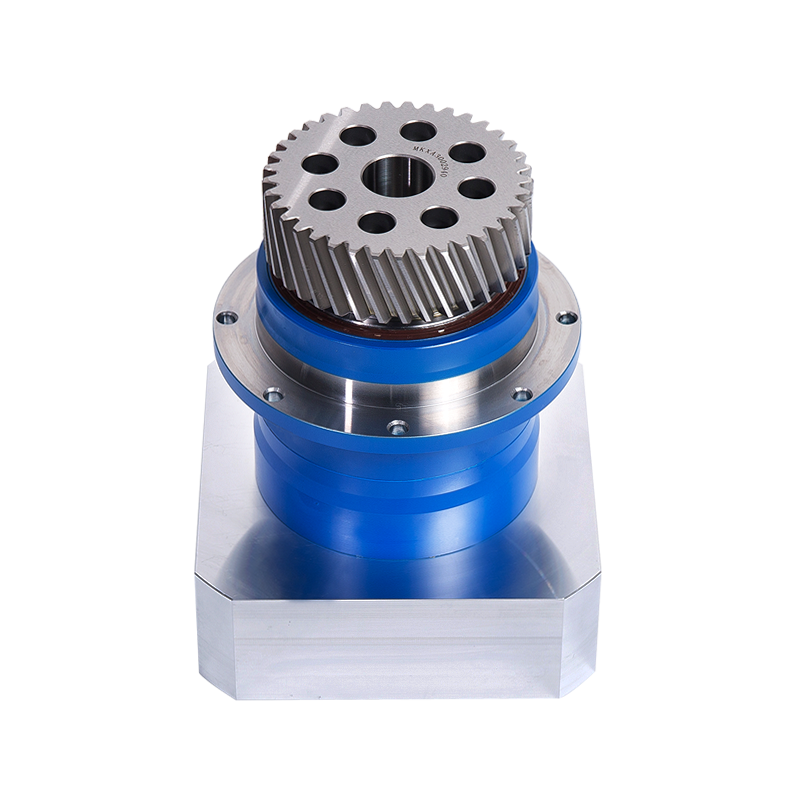
Laser-cutting equipment often operates in confined spaces, requiring motion control systems that can seamlessly integrate without compromising efficie...
See Details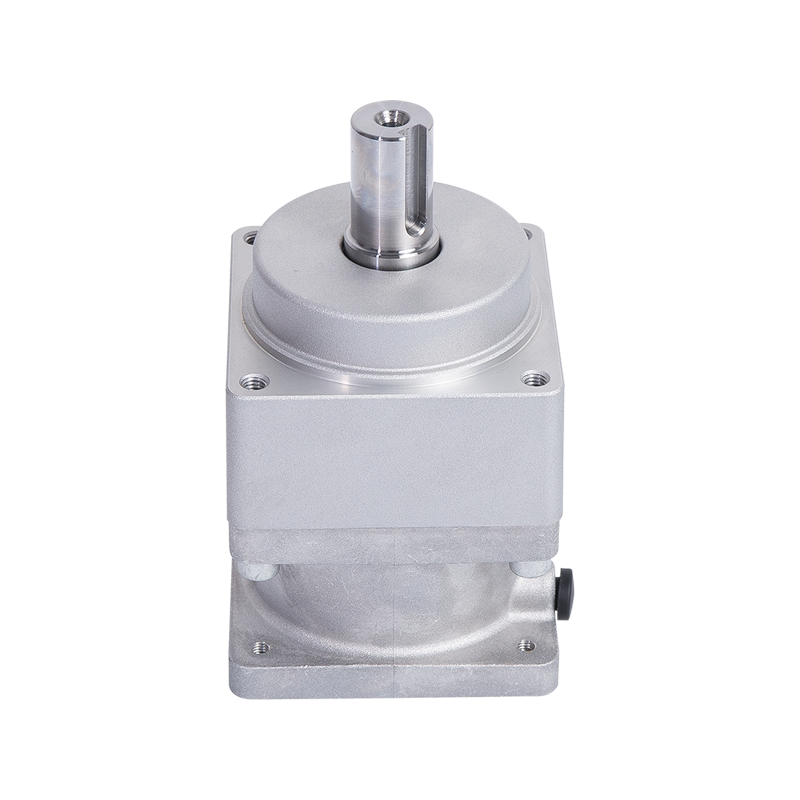
This MKGC-5C-400 high torque durable economical star reducer is designed for stable, cost-effective power transmission in general industrial and heavy...
See Details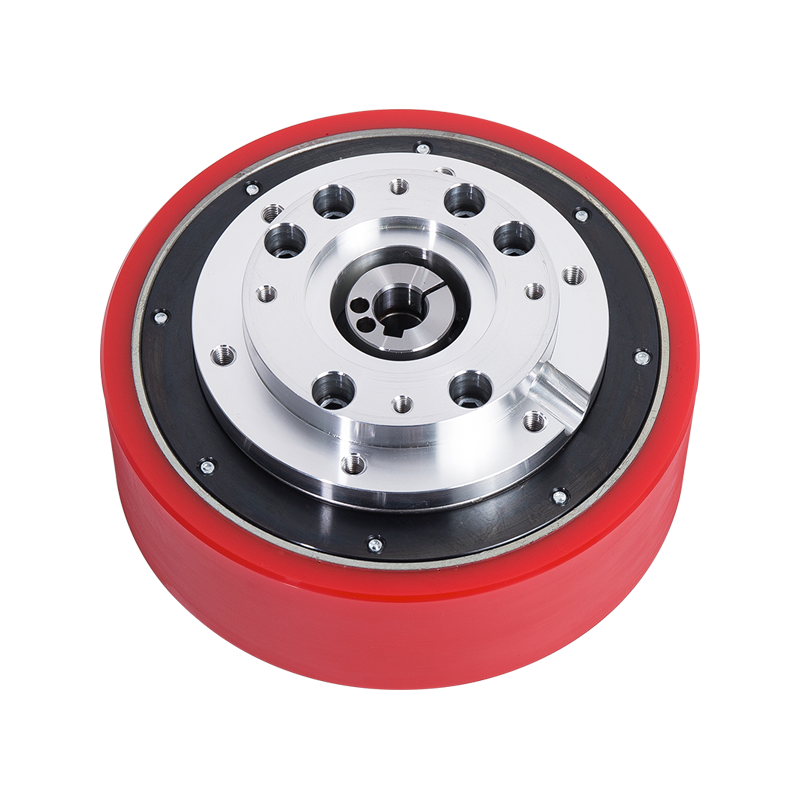
At the heart of the RCIV ring gear output AGV special planetary reducer is a sophisticated design that features a distinctive ring gear output configu...
See Details
High-performance output shaft type planetary reducer, with high rated speed and high dynamic application, adopts lightweight design and high-efficienc...
See Details
The worm bevel double output shaft type planetary reducer uses a combination of worm gear transmission and planetary gear transmission to improve the ...
See Details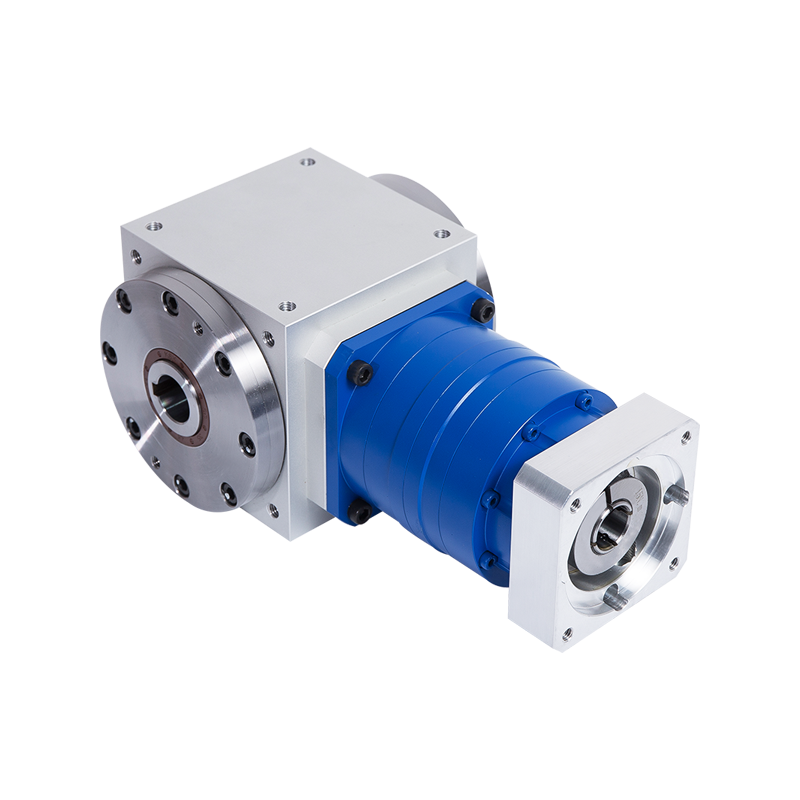
The hollow-type high-precision spiral bevel gear reducer is specially designed. The hollow design makes the center space of the reducer empty and can ...
See Details
MAKIKAWA-MOTION TECHNOLOGY (ZHEJIANG) CO., LTD. @ All rights reserved

Custom High Precision Planetary Gearbox Reducer Manufacturers