

 en
en русский
 Deutsch
 日本語
日本語 Español
 简体中文
简体中文Door Driving Precision Planetary Reducer
Cat:MK series planetary reducer
Industry-product lineupApplicable to: Door drive (planetary, coaxial shaft)MKB Precision Planetary Reducer is a cutting-edge mechanical device designe...
See DetailsContent
The core function of a servo reducer is to bridge the gap between a servo motor's high-speed, low-torque output and the application's need for low-speed, high-torque, and precise positioning. A well-matched reducer protects the motor from overload, dramatically increases system stiffness, and eliminates the mechanical play that destroys accuracy.
The primary purpose of a reducer in dynamic servo applications is often inertia matching, not just torque multiplication. The reflected load inertia changes by the square of the reduction ratio. A mismatched inertia forces the motor to spend excessive current fighting its own rotor weight, leading to overshoot and ringing at the settling point.
For high-speed pick-and-place robots requiring rapid directional changes, a common rule is to keep the load-to-motor inertia ratio below 5:1. Using a higher ratio gearhead to reduce the reflected inertia makes the system respond as if the load is drastically lighter. Conversely, if the inertia ratio is naturally low, a user might select a smaller motor paired with a higher ratio reducer to increase torque density without sacrificing stability.
The choice of gearing architecture defines the ceiling of your system's accuracy. Two designs dominate closed-loop servo systems, each with distinct mechanical characteristics.
Inline planetary reducers split the torque across three or more planet gears, providing exceptional torsional stiffness and power density. In standard precision classes, backlash typically ranges from 3 to 8 arcminutes. Advanced helical crowned planetary designs lower this to under 1 arcminute while reducing noise levels below 65 decibels. They are best suited for continuous duty cycles on conveyor drives or cutting spindles where rigidity prevents tool chatter.
Strain wave reducers rely on the elastic deformation of a flexible spline to transfer motion. Because multiple teeth engage simultaneously across a large circumference, the backlash is theoretically zero. This makes them the standard solution for robotic surgical arms and collaborative robot joints where positional repeatability must stay within ±0.1 millimeters without any deadband correction in the servo tuning.
Backlash is a mechanical dead zone where the motor shaft rotates but the load does not move. In a position loop, this introduces a non-linearity that forces the servo drive to constantly "hunt" for position, generating audible noise and heat.
| Classification | Typical Backlash (arcmin) | Typical Application |
|---|---|---|
| Standard | 8 - 15 | Belt-driven packaging conveyors |
| Precision | 3 - 5 | CNC rotary axes and general automation |
| Ultra-Precision | < 1 | Laser cutting heads and grinding machines |
Selecting an ultra-precision gearhead with less than 1 arcminute of lost motion allows the servo drive's auto-tuning algorithm to maximize gains without triggering an instability fault. This directly shortens settling time in point-to-point moves.
When integration space is tight, a right-angle reducer using spiral bevel or hypoid gearing becomes necessary. The key specification to scrutinize here is torsional rigidity, as a lack of it causes the output shaft to wind up and release energy unevenly during motor reversal.
A high-stiffness hypoid reducer with a value of 14 Newton-meters per arcminute can nearly double the positional accuracy of a lower-grade unit rated at just 7 Nm/arcmin, even if the stated backlash values are similar. A unified axis driven through a rigid hypoid reducer avoids the trajectory contouring errors visible as surface streaks during milling.
The mechanical interface between the motor shaft and the reducer input pinion determines how cleanly torque is transmitted. While a flexible beam coupling can forgive minor misalignment without transmitting side loads to the motor bearings, it introduces spring-like windup.
In a system with a high torque requirement of 300 Newton-meters, a flexible coupling can introduce an angular deflection of 0.5 degrees under load. This effectively acts as a large electronic backlash that the servo loop cannot compensate for. A rigid clamp-style or bellows coupling eliminates windup but demands precise shaft alignment, typically within 0.05 millimeters total indicated runout, to prevent premature bearing fatigue.
Reducers generate heat through sliding friction and oil churning, especially in high-input-speed scenarios above 3000 input revolutions per minute. Hypoid gears with high offset friction can reach a thermal limit quickly if lubrication is insufficient.
Sealed reducers with synthetic hydrocarbon-based greases often have a churning loss of just 2% to 4% per stage, compared to older mineral oils with losses exceeding 8%. This efficiency gain translates directly to a cooler running servo motor, reducing the risk of demagnetization in the rotor magnets during prolonged peak torque operations. For continuous duty, forced air cooling fins on the reducer housing can lower steady-state temperature by 15 to 20 degrees Celsius.
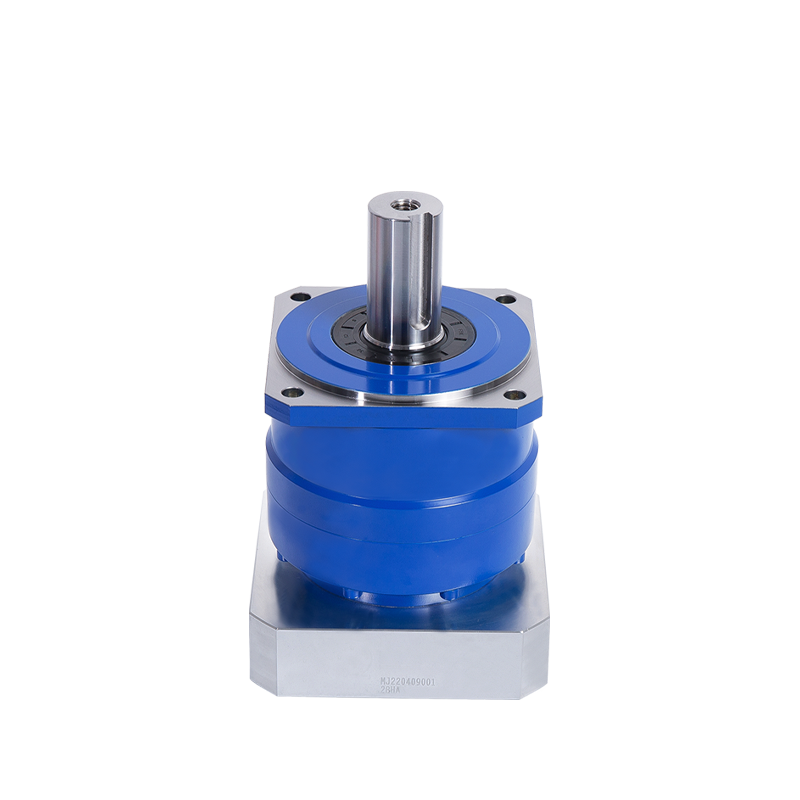
Industry-product lineupApplicable to: Door drive (planetary, coaxial shaft)MKB Precision Planetary Reducer is a cutting-edge mechanical device designe...
See Details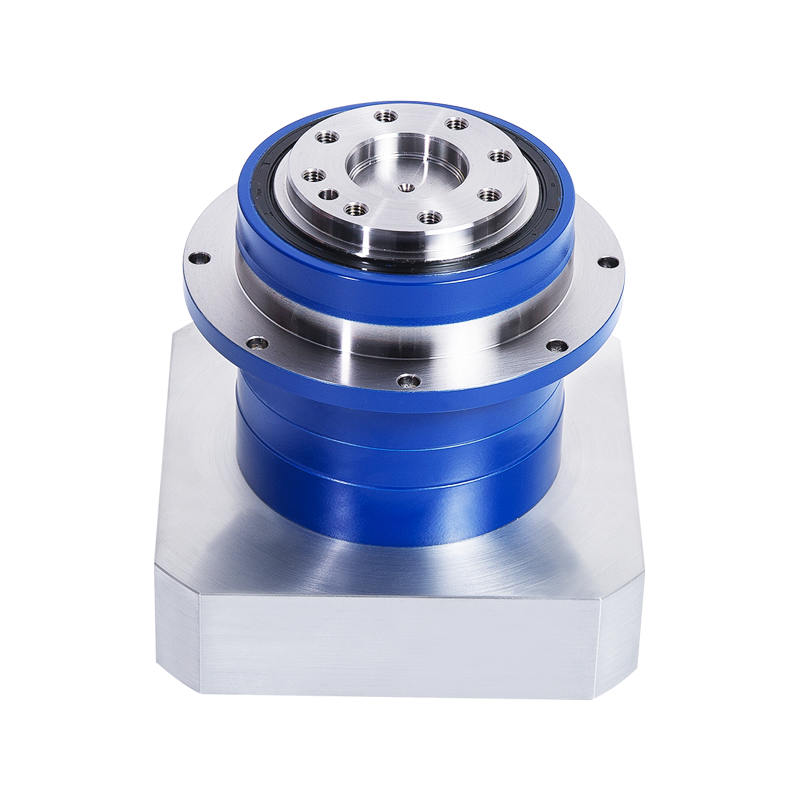
Meet the needs of customers with high precision requirements for semiconductor devices, automation equipment, machine tools, etc.Applicable to: Door d...
See Details
Meet the needs of customers with high-precision requirements for semiconductor devices, machine tools, etc.MKG reducer meets the various needs of cust...
See Details
Suitable for customers with rich needs such as semiconductor manufacturing equipment and machine toolsApplicable to: Tapered roller bearings for door ...
See Details
MKEL Planetary Reducer specifically engineered for the intricate demands of semiconductor fabrication processes integrates into manufacturing equipmen...
See Details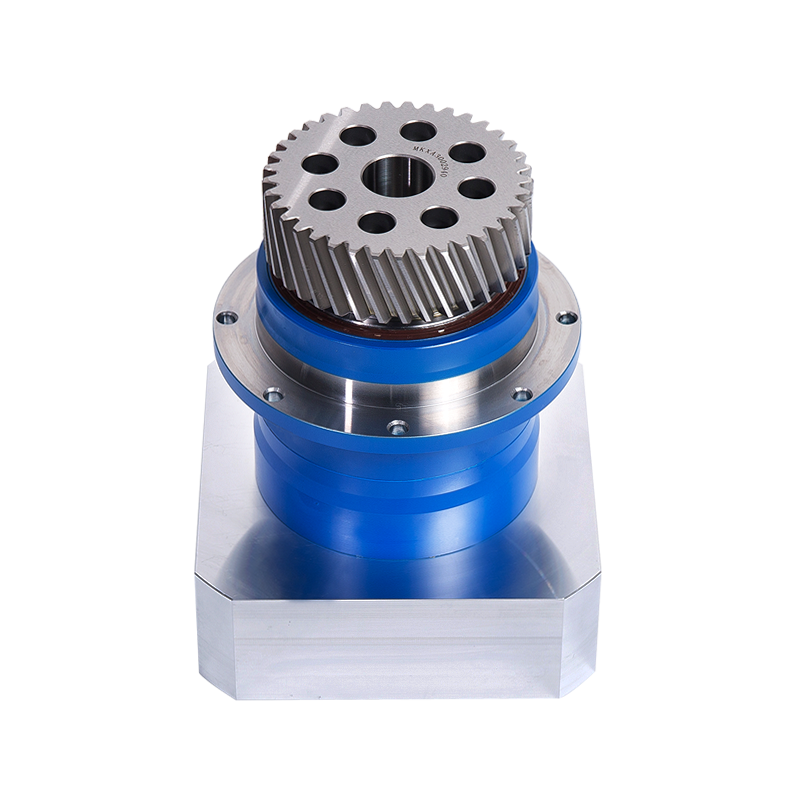
Laser-cutting equipment often operates in confined spaces, requiring motion control systems that can seamlessly integrate without compromising efficie...
See Details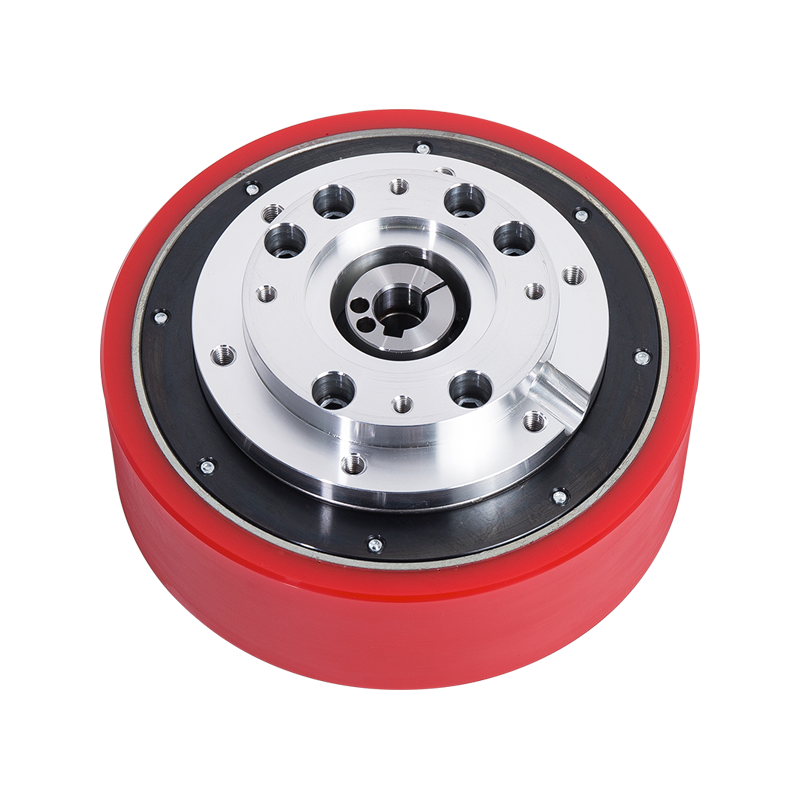
At the heart of the RCIV ring gear output AGV special planetary reducer is a sophisticated design that features a distinctive ring gear output configu...
See Details
High-performance output shaft type planetary reducer, with high rated speed and high dynamic application, adopts lightweight design and high-efficienc...
See Details
The worm bevel double output shaft type planetary reducer uses a combination of worm gear transmission and planetary gear transmission to improve the ...
See Details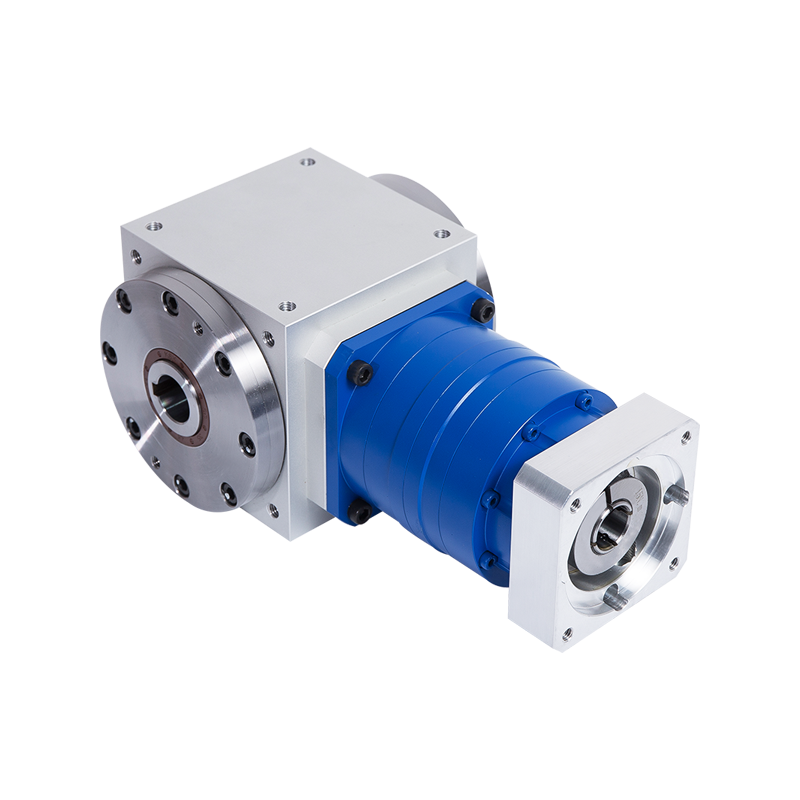
The hollow-type high-precision spiral bevel gear reducer is specially designed. The hollow design makes the center space of the reducer empty and can ...
See Details
MAKIKAWA-MOTION TECHNOLOGY (ZHEJIANG) CO., LTD. @ All rights reserved

Custom High Precision Planetary Gearbox Reducer Manufacturers